Engineered for minimal re-tooling
The module is designed to mount into your existing structure where envelope and mounting conditions allow. If your toy would need a change, you'll know at the structure review — before any tooling spend.
 Bontoys by BenranDiscuss a pilot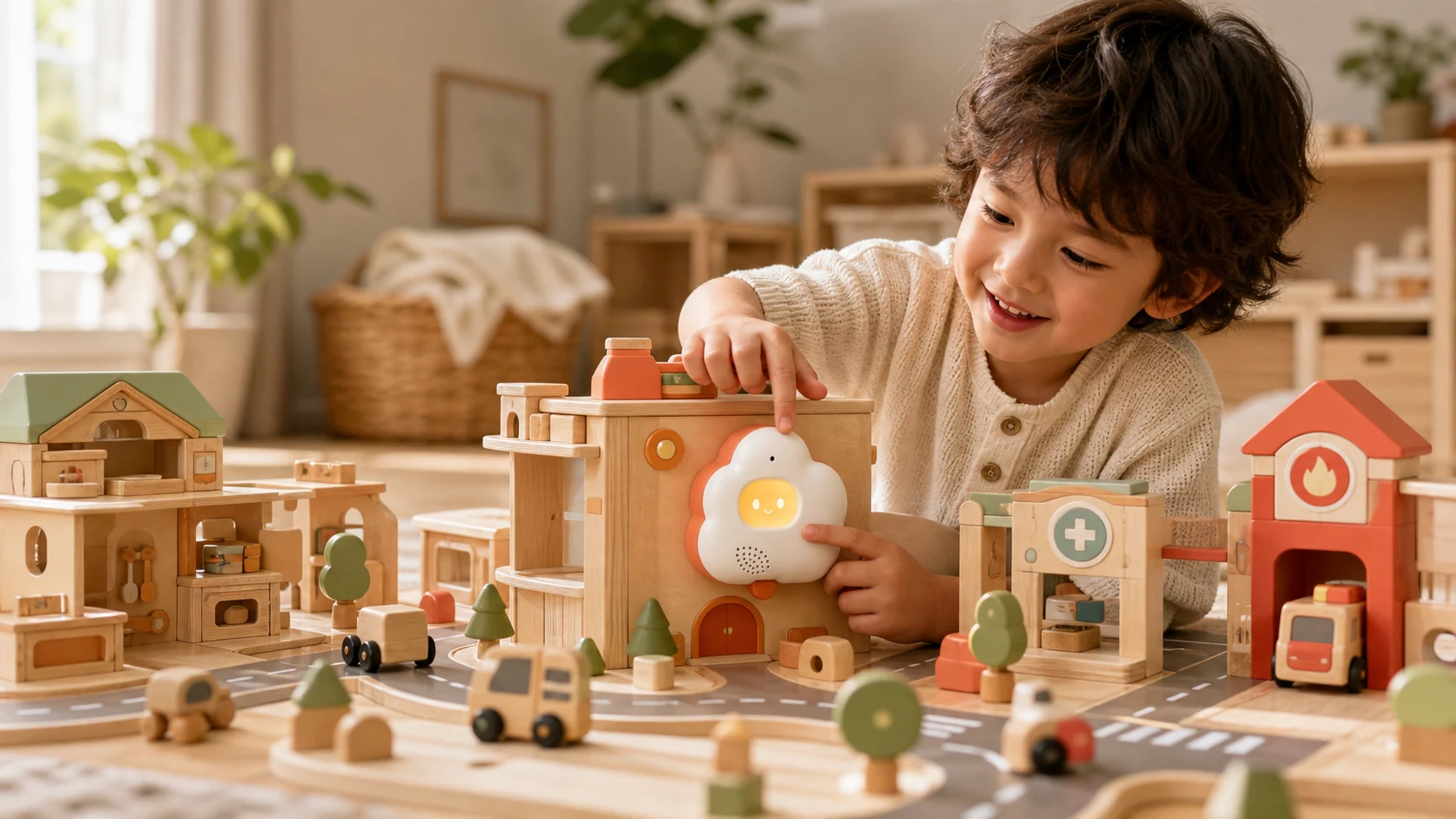
Voice modules & scenario dialogue for children's toys
Bontoys builds voice modules and scenario dialogue designed to mount into existing toys — no screen, engineered to fit existing structures where envelope and mounting conditions allow. Structural fit is confirmed at the review stage, before any tooling spend. For ages 3–6.
Working prototypeLive voice loopScenario dialogue methodPublic R&D record ↗
Why voice, why now
We think voice is becoming a new play surface for the toys children already love — our job is to build the safety rails for it.
The module is designed to mount into your existing structure where envelope and mounting conditions allow. If your toy would need a change, you'll know at the structure review — before any tooling spend.
Scenario dialogue continues your toy's own play — roles, props, and actions — instead of bolting a generic chatbot onto it.
Designed to answer at the right moment, wait when it should, and stop pressing when the child moves on — behaviors we test in prototype scenarios.
Proof a child can feel
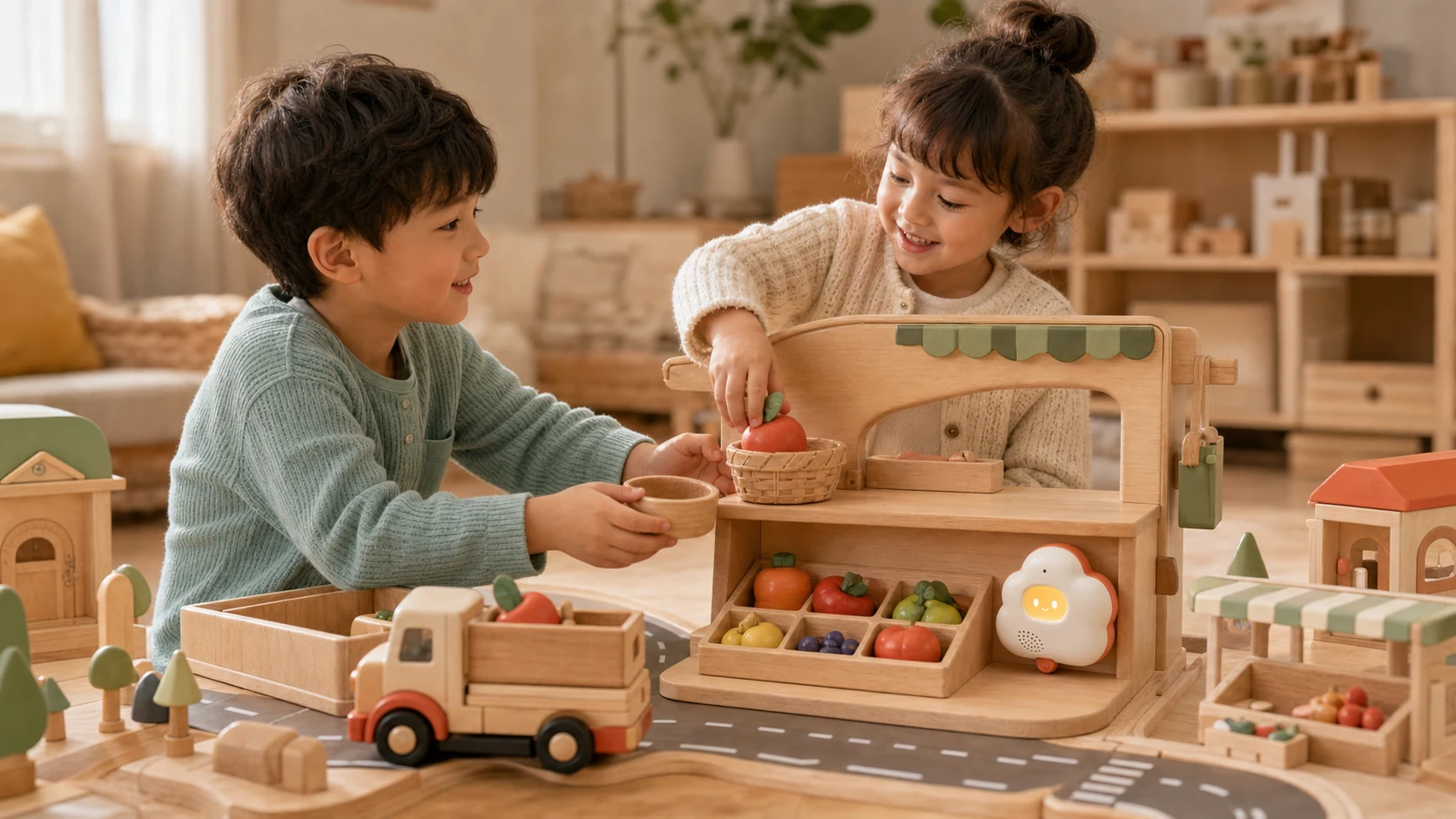
Shop
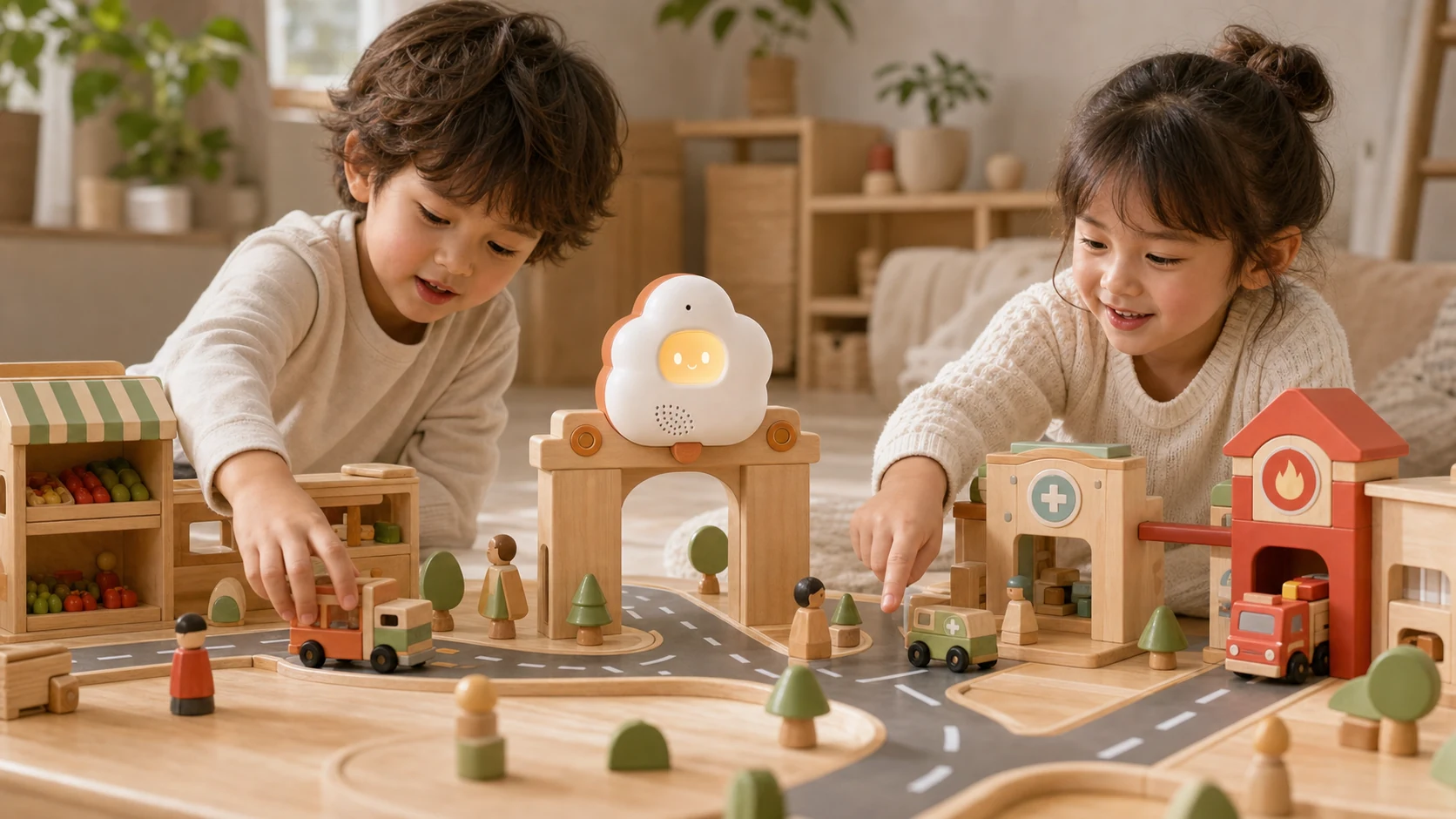
“Who would you like to invite today?” — the little shopkeeper takes an order, and the toy answers in character.
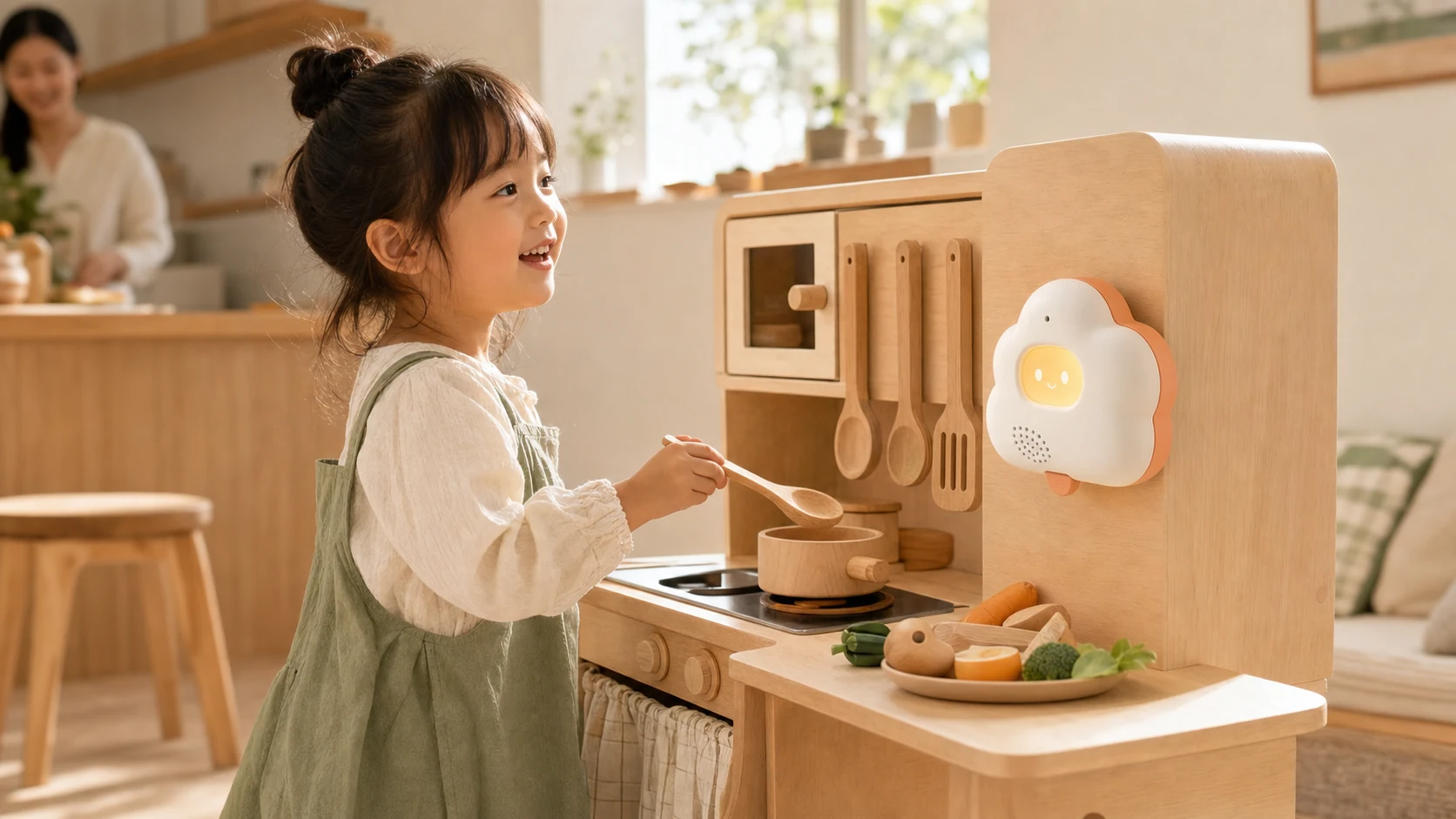
Kitchen
“Who should taste this soup first?” — the little chef serves, and the toy keeps the game going.
Trip
“Where is the next stop?” — the little driver sets off, and the story travels along.
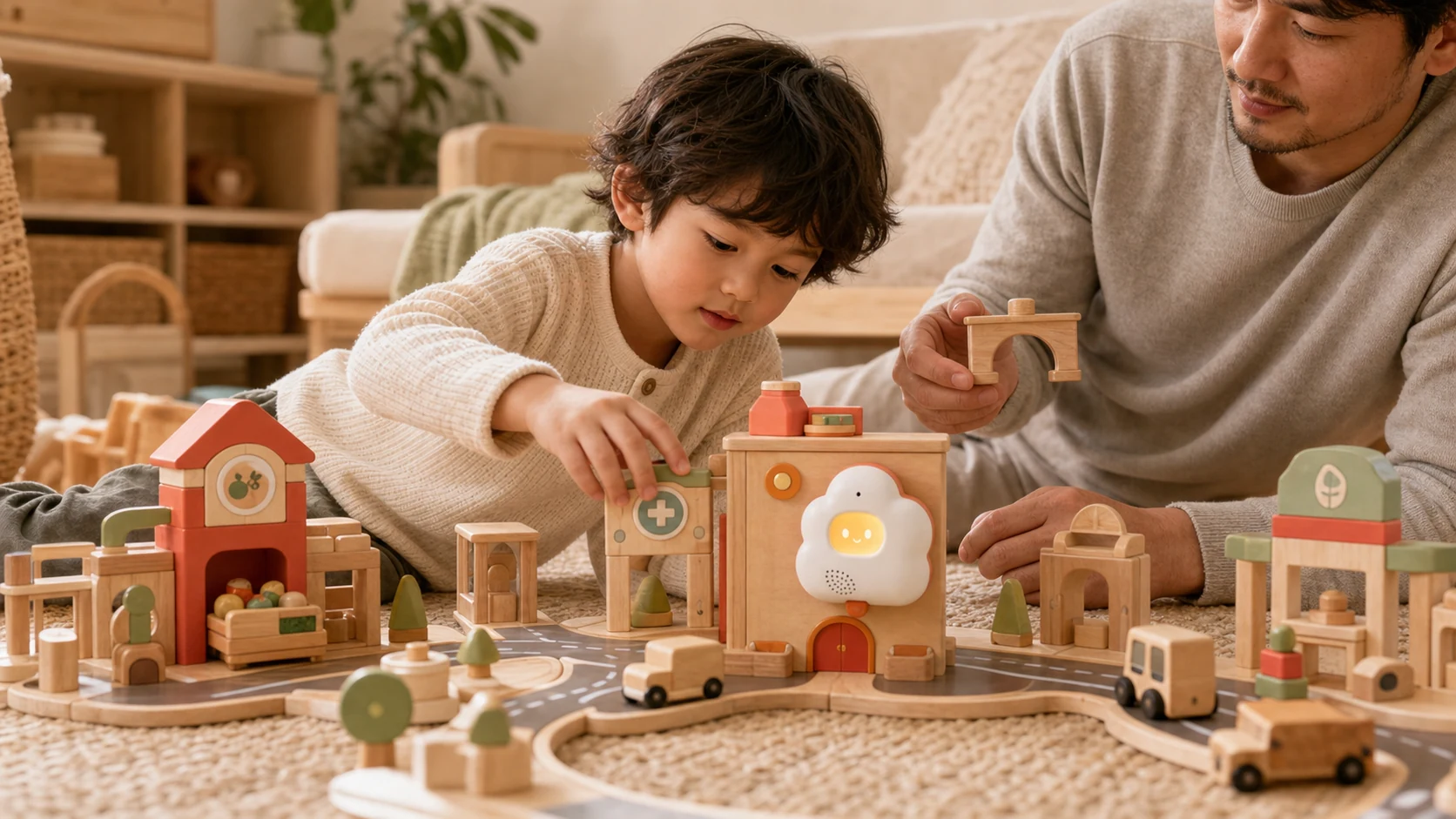
Multi-player modes are part of the scenario design: child-with-child shared play, and child-with-parent guided play — because real play is rarely solo.
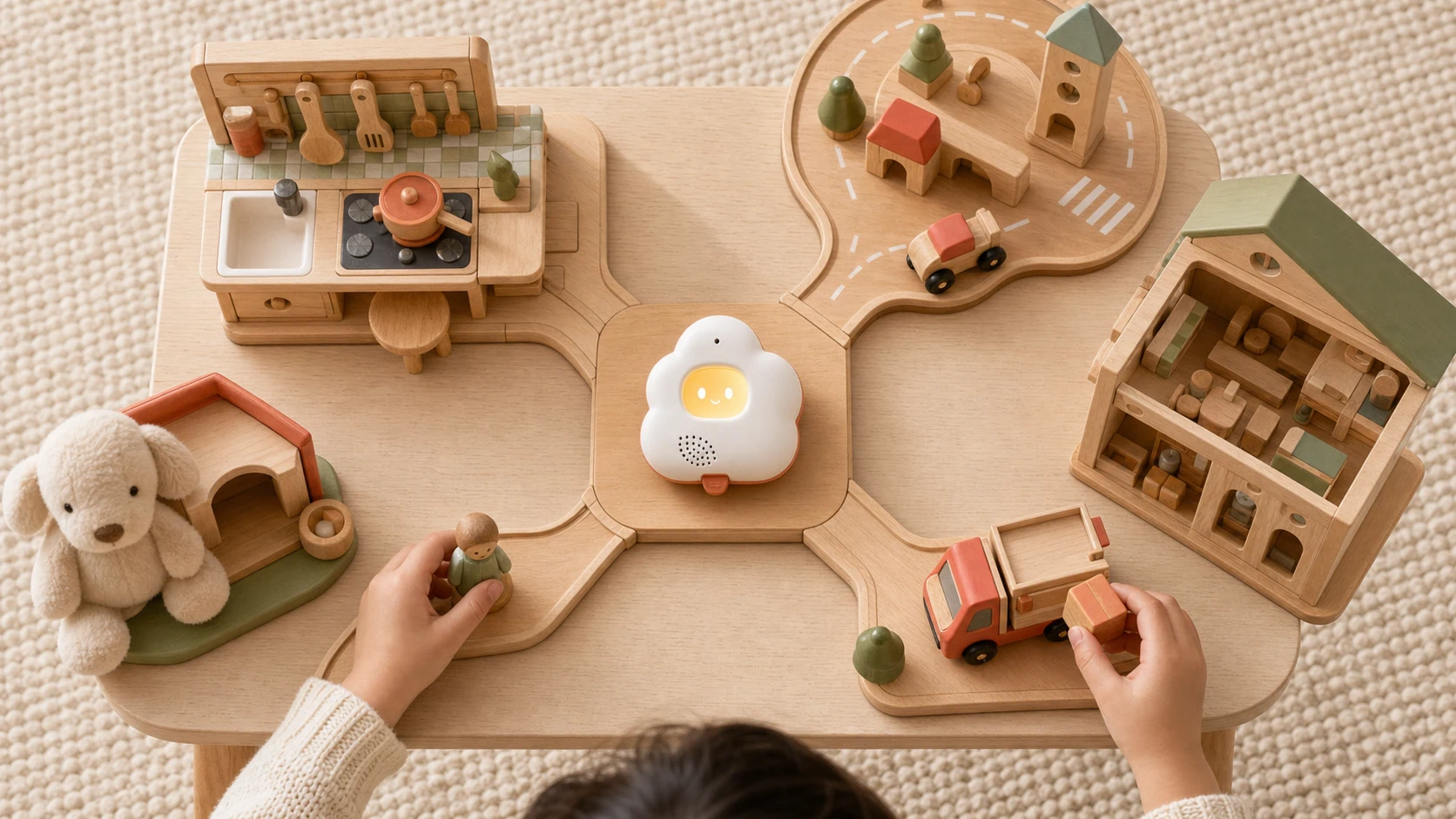
The same module is designed to travel across scenes — shop, kitchen, trip — and the dialogue follows, so separate toys can act as one connected play world.
Dialogue samples from the working prototype's scenario method. Full demo under NDA.
How it works
Listens, decides, and speaks — inside the toy you already make.
Turns your characters and props into answers worth hearing.
Sets when to listen, when to ask, and when to stay quiet.
Aligns size, power, openings, assembly, and certification with your line.
The path in
First play-pattern review back within 5 business days · prototype integration is typically measured in weeks, not quarters, depending on toy complexity.
We study the age, the characters, and how kids actually use the toy.
Gate: if voice adds no clear value to this toy, we say so and stop.
Size, power, openings, assembly, certification.
Gate: if the structural change costs too much, we shrink the scope first.
Module, scripts, and real play, tested together.
Gate: if responses interrupt play, we go back to scripts and pacing.
Supply, testing, and delivery, confirmed after the prototype passes.
Gate: if conditions aren't ready, you keep the findings — no commitment.
Every stage has an explicit go/no-go gate — we would rather tell you “no” early than sell your toy a module it doesn't need.
Proof
A physical module exists and runs the play scenarios on this page.
See the prototype record →The child speaks, the toy waits, then answers in character.
Watch the concept loops →Roles, props, and actions become dialogue through a documented method.
Read the integration guide →These are AI-generated concept visualizations, not footage of the physical prototype.
Safety & compliance
Designed to respond at the right moment and to leave the play in the child's hands — behaviors we regression-test in prototype scenarios.
A toy companion, not a data product: we map what audio leaves the device before anything ships.
No outcome claims until we can prove them.
Concept visuals are always labeled; photos come only with a verified evidence chain.
Formal child-privacy review (e.g. kidSAFE-type programs) is planned to begin alongside the first brand pilot.
No grand partnership talk yet.
“The nature of children delights in play.” — after Wang Yangming, Outline of Teaching the Young (1518). Our name, and our design rule.